National Data and Integrated Scenarios
The National Data and Integrated Scenarios (NDIS) Working Group, based at the University of British Columbia, is compiling secondary data to create a user-friendly searchable research database. This database will house important social, cultural, governance, economic and environmental data and we envision that it will help researchers more easily assess and monitor trends related to the health of Canada's three coastal-ocean environments. Through our work with scenario modelling, we are mapping the potential pathways to human and environmental sustainability within Canada's coastal-ocean regions and appraising their associated opportunities and risks.
In addition to our formal SSHRC partners, the Nereus and Sea Around Us programs at the University of British Columbia are informal associates of the NDIS Working Group.
Activities 2019-2020
NDIS continues to align new and on-going work with the Changing Oceans Cross-cutting Theme. The initiatives carried out by NDIS for this period include:
- Transboundary fisheries governance between USA and Canada under changing oceans. NDIS continued its collaboration with the Law and Policy WG to evaluate how changing fish stocks distributions and abundance that are shared between USA and Canada would challenge existing international treaties and agreements between the two countries. We planned and worked towards a set of papers for a special issue in a peer-review journal, and had held a session in the Integrated Marine Biosphere Research (IMBER) Open Science conference in June 2019 on this topic. This research includes PIs from the two WGs as well as postdocs (2 in Dal) and a PhD student (1 in UBC).
- Development of Canadian Oceans Scenario and Pathway. We continue to develop the Canadian Oceans Scenario and Pathway in collaboration with members from the Pacific and Atlantic WGs. A draft manuscript describing multi-scale scenarios for Canadian oceans is to be developed by June 2019, and will also form part of the Changing Oceans chapter in the OceanCanada book.
- OceanCanada book. NDIS members are contributing to the Changing Oceans chapter of the OceanCanada book.
Activities 2018-2019
NDIS continues to align new and on-going work with the Changing Oceans Cross-cutting Theme. The initiatives carried out by NDIS for this period include:
- Transboundary fisheries governance between USA and Canada under changing oceans. NDIS continued its collaboration with the Law and Policy WG to evaluate how changing fish stocks distributions and abundance that are shared between USA and Canada would challenge existing international treaties and agreements between the two countries. We planned and worked towards a set of papers for a special issue in a peer-review journal, and will hold a session in the Integrated Marine Biosphere Research (IMBER) Open Science conference in June 2019 on this topic. This work was presented at the OceanCanada conference in Halifax in August 2018. This research includes PIs from the two WGs as well as postdocs (2 in Dalhousie) and a PhD student (1 in UBC).
- Development of Canadian Oceans Scenario and Pathway. We continue to develop the Canadian Oceans Scenario and Pathway in collaboration with members from the Pacific and Atlantic WGs. A draft manuscript describing multi-scale scenarios for Canadian oceans is to be developed by June 2019, and will also form part of the Changing Oceans chapter in the OceanCanada book.
- Arctic Monitoring and Assessment Program (AMAP) report. NDIS member Nadja Steiner coordinated the drafting of a chapter for the new AMAP report to which members of the NDIS in UBC (and other OCP WGs) contributed. The chapter linked biophysical changes in Canadian Arctic oceans with social-economic impact assessment and implications for laws and policies. This chapter, considered a main output of the Changing Ocean CCT, was published in 2018.
Activities 2017-2018
NDIS is continuing work on scenario development, Canadian Oceans Scenario and Pathway, and held a workshop in January 2018 where members of all WGs and CCT leads attended to move this important component of OceanCanada work forward. The WG plans to have a first draft of a manuscript based on this work by late summer 2018. It is also continuing the study of the socio-economic implications of rebuilding Canada's overfished fish stocks in collaboration with OceanCanada partner, Oceana-Canada. NDIS held a workshop with various stakeholders, with a strong representation from First Nations representatives, where it identified depleted fish stocks to be studied from both the Atlantic and Pacific oceans. A third effort by NDIS is the ongoing work on a special issue of Ecology and Society. This work is a key example of a cross-cutting study on the ecological, economic, policy and legal implications on several of Canada's transboundary management arrangements in regards to changing oceans as sea surface temperatures rise. NDIS is also contributing to the ongoing Arctic Monitoring and Assessment Programme (AMAP) report with the contribution, "On Arctic multi-scale ocean acidification scenarios and projections." A first draft of a paper on the values derived from Canada's oceans has been completed and is being revised.
Activities 2016-2017
The National Data and Integrated Scenario Working Group (NDIS) took stock of the available datasets on Canada's three oceans and developed the first version of the OCP database, as well as a global database of aboriginal fisheries and an innovative fuzzy logic algorithm to synthesize available data (both quantitative and qualitative) to assess the status and trends of Canadian oceans. We identified indicators and extracted relevant data to assess the status of Canada's three oceans in relation to the Aichi Targets on the conservation of biodiversity. In addition, we undertook two literature reviews: one on the application of scenario analysis to study potential future states of Canada's oceans, and social, cultural and economic impacts on communities that depend on them; and the second on potential implications of marine pollutants for the health of coastal ecosystems and communities in Canada. We developed national scale scenario storylines for Canadian ocean-related sectors, and adapted simulation models to make projections under climate change and ocean acidification. Moreover, in collaboration with DFO, we will contribute to the Arctic Monitoring and Assessment Program to assess the socio-economic impacts of ocean acidification in the Canadian Arctic. We led the writing of a policy paper suggesting actions for the Canadian government to take to support the sustainability of Canadian coastal communities and the oceans that support them. We are also working closely with the OceanCanada Cross Cutting Themes to study the ecological, economic, policy and legal implications of the increase in sea surface temperatures on several of Canada's transboundary management arrangements.
Activities 2015-2016
The NDIS Working Group was involved in a number of initiatives in 2015/2016:
- Taking stock of the available datasets on Canada's three oceans and developing a first version of the OCP database;
- Discussing with other WGs on developing an OCP platform for sharing and archiving data;
- Publishing a policy paper in Marine Policy suggesting actions that can be taken by the Canadian federal government to support the sustainability of Canadian coastal communities and the oceans that support them;
- Developing a global database of aboriginal fisheries (manuscript submitted to PloS One);
- Developing an innovative fuzzy logic algorithm to synthesize available data (both quantitative and qualitative) to assess the status and trends of Canada's oceans;
- Identifying and extracting data for indicators to assess the status of Canada's oceans in relation to the Aichi Targets on the conservation of biodiversity;
- Reviewing the literature on the application of scenario analysis to study potential future states of Canada's oceans, and the situations of the communities that depend on them socially, culturally and economically (manuscript submitted to Regional Environmental Change);
- Adapting simulation models to make projections for the future of Canada's oceans under climate change and ocean acidification;
- In collaboration with Mitac and the Vancouver Aquarium, reviewing the literature on the potential implications of marine pollutants to the health of coastal ecosystems and communities in Canada;
- Studying the Bella Bella herring fishery to determine its economic and social contributions to different groups, in particular, women;
- Initiating the establishment of a set of indicators to evaluate the social and economic contribution of Canada's oceans to the wellbeing of coastal communities;
- Continuing to work on the contributions of small scale vs. large scale fisheries in BC;
- Initiating a collaboration with the Department of Fisheries and Oceans (DFO) to contribute to the Arctic Monitoring and Assessment Program that assesses the socio-economic impacts of ocean acidification on the Canadian Arctic.
Investigators
- William Cheung (Co-Lead), University of British Columbia
- Rashid Sumaila (Co-Lead), University of British Columbia
- Megan Bailey, Dalhousie University
- Nathan Bendriem, University of British Columbia
- Andrés Cisneros-Montemayor, University of British Columbia
- Robert Parker, University of British Columbia
- Nadja Steiner, Fisheries and Oceans Canada
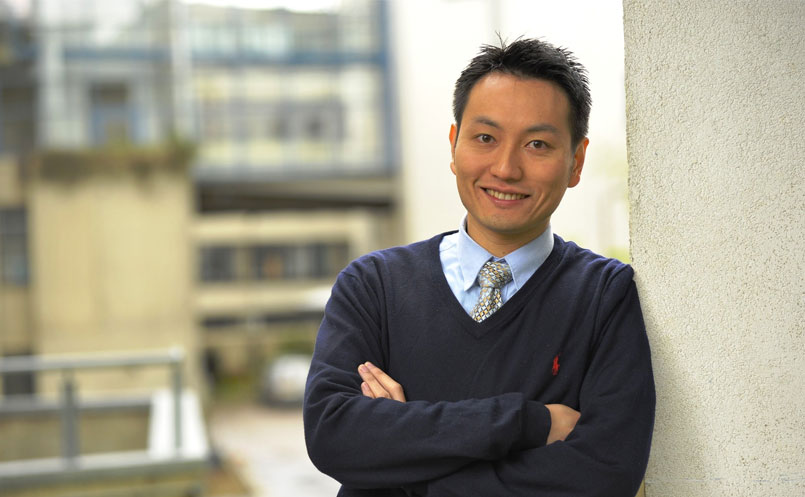
Dr. William Cheung
National Data and Integrated Scenarios Working Group Co-Lead
Highly Qualified Personnel
- Juan José Alava — Assessing and modelling climate–pollutant interactions in marine food webs in the Pacific and coastal British Columbia, Canada.
- Tim Cashion — Working on the Fish Tracker Initiative to link investors to sustainable and unsustainable fisheries practices.
- Sarah Harper — Understanding the Pacific herring economy in Bella Bella with a focus on the contributions by women.
- Carie Hoover — Identifying and selecting marine indicators for the Inuvialuit Settlement Region in the Canadian Arctic.
- Isaac Jonas — Sustainability Fisheries Insurance Fund (SIF).
- Juliano Palacios Abrantes — Transboundary fisheries management in changing North Atlantic and Pacific Oceans: taking stock, future scenarios.
- Travis Tai — Biophysical responses of climate change and ocean acidification, and subsequent effects on fisheries profit and communities.
- Nicholas Talloni-Alvarez — Examining the potential benefits from meeting the Paris Agreement warming target for marine fisheries and seafood supply in Canada.
- Louise Teh — Developing scenarios to investigate the future of Canada's oceans.
- Lydia Teh — The contribution of Canada's ocean to human well-being.
Presentations
See Presentations
Partners
 Fisheries and Oceans Canada
 Oceana Canada
 WWF-Canada
 UNU-INWEH
 T. Buck Suzuki Foundation
 Living Oceans Society
 University of British Columbia