News

Can ecosystem services make conservation normal and commonplace?

Without widespread and immediate changes in human values and activities, massive tracts of natural habitat will be degraded to the detriment of those ecosystems, ecosystem services, and many threatened taxa—in the oceans and elsewhere. Despite this, the conservation movement has yet to devote much attention to the intentional project of widespread norm change. By one logic, the ecosystem services concept offers a means of integrating meaningful conservation into decision making by diverse government and corporate actors, potentially normalizing conservation. But normalizing conservation would require not only the uptake of ecosystem-services concepts but also widespread changes in conservation practice and stewardship values—on a scale that far exceeds what we have witnessed to date. The concept of ecosystem services has potential for assisting such a societal transformation because it effectively puts a human face on environmental change, thereby enabling the extension of responsibility and morality into environmental arenas at all scales. Furthermore, cultural ecosystem services merit particular attention because of their contribution to the formation of attachments to particular places and to identities rooted in nature and conservation, which presents an opportunity to consolidate and shape deep motivations for lasting conservation. Realizing these two opportunities in a way that is both appropriate and effective, however, will require several important innovations and new institutions, which we propose here. One key step is to enlist a broad base of consumers and corporations in the funding of actions to mitigate the environmental impacts associated with their participation in global supply chains, via funding vehicles that are conspicuous, easy, enjoyable, and not too expensive. We describe a new initiative called CoSphere (a Community of Small-Planet Heroes, Ecologically Regenerating Economies) that strives to create such structures. With consolidated effort and explicit attention, conservation can become normalized to the benefit of current people, future generations, and life on Earth. (Chapter in Conservation for the Anthropocene Ocean: Interdisciplinary Science in Support of Nature and People.)

Regional variability in the sensitivity of Caribbean reef fish assemblages to ocean warming.

Ocean warming is expected to impact biodiversity and fisheries in the tropics through shifts in species’ distributions, leading to local extinctions and changes in species composition of catches. However, regional-scale patterns may differ from global trends due to the influence of important environmental factors such as ocean warming, fishing and habitat availability. Here, we used the mean temperature of the catch to test the hypothesis that, for the period of 1971 to 2010, regional variation in species-turnover of exploited reef fish assemblages among 9 Caribbean countries can be explained by differences in the rate of warming, species’ thermal preferences, changes in trophic structure due to fishing and potential reef habitat across the region. Sea surface temperature and the mean temperature of the catch displayed rates of increase of 0.14 and 0.19°C decade-1respectively, on par with the global average and higher when compared to the global average for all tropical fisheries. These rates also varied across the 9 Caribbean countries, ranging from 0.04 to 0.18°C decade-1 for sea surface temperature and 0.10 to 0.62°C decade-1 for the mean temperature of the catch. The negative interaction between potential reef habitats in each country and sea surface temperature in relation to the mean temperature of the catch suggests possible moderating effects of available habitats on the sensitivity of fish communities to warming. In addition, the negative relationship of trophic level with the mean temperature of the catch suggests that fishing increases their vulnerability. Findings from this study can help elucidate factors driving variations in the sensitivity of exploited fish communities to warming, and have implications for the management of living marine resources in the Caribbean region.

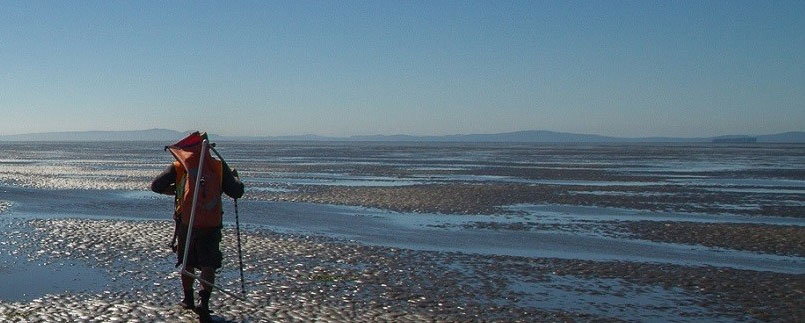
The Vancouver Fraser Port Authority is conducting field studies in March 2018 as part of ongoing archaeological and ecological conditions assessment work for the proposed Maplewood Marine Restoration Project. Archaeologists, biologists, and environmental engineers will be conducting site visits to the marine and upland areas of the proposed project site, located on the north shore of Burrard Inlet, approximately two kilometres east of the Ironworkers Memorial Bridge, to assess the potential for archaeological values at the site and to conduct physical and biological surveys.

Join the brightest minds in economics, art, conservation, and exploration for an evening of dynamic discussions and performances by Museum scientists, artists, oceanographers, and entrepreneurs to kick off the special exhibition Unseen Oceans. This lively event, held under the blue whale, illuminates the cutting-edge in marine research and inspires wonder about the world’s oceans.

Who brings in the fish? The relative contribution of small-scale and industrial fisheries to food security in Southeast Asia.

Amidst overexploited fisheries and further climate related declines projected in tropical fisheries, marine dependent small-scale fishers in Southeast Asia face an uncertain future. Yet, small-scale fishers are seldom explicitly considered in regional fisheries management and their contribution to national fish supply tends to be greatly under-estimated compared to industrial fisheries. Lack of knowledge about the small-scale sector jeopardizes informed decision-making for sustainable ecosystem based fisheries planning and social development. We fill this knowledge gap by applying reconstructed marine fish catch statistics from Cambodia, Malaysia, Thailand, and Vietnam—countries of the Gulf of Thailand—from 1950 to 2013 to assess the relative contribution of small-scale and industrial fisheries to national food security. Reconstructed catches quantify reported and unreported fish catch from industrial, small-scale, and recreational fishing. We then conduct a comparative analysis of the degree to which the industrial and small-scale sectors support food security, by converting total catch to the portion that is kept for human consumption and that which is diverted to fishmeal for animal feed or other purposes. Total reconstructed marine fish catch from the four Southeast Asian countries totalled 282 million t from 1950 to 2013, with small-scale sector catches being underestimated by an average of around two times. When the amount of fish that is diverted to fishmeal is omitted, small-scale fishers contribute more food fish for humans than do industrial fisheries for much of the period until 2000. These results encourage regional fisheries management to be cognisant of small-scale fisheries as a pillar of socio-economic well-being for coastal communities.

Identification of native and non-native grass shrimps Palaemon spp. (Decapoda: Palaemonidae) by citizen science monitoring programs in Atlantic Canada.

Grass shrimp collected by the Community Aquatic Monitoring Program (CAMP) in estuaries of the southern Gulf of St. Lawrence, Canada were previously assumed to be the native Palaemon vulgarisSay, 1818. Taxonomic identification of grass shrimps from CAMP estuaries revealed most individuals were P. vulgaris, but several from the Souris River and Trout River estuaries in Prince Edward Island (PEI) belong to the European species P. adspersusRathke, 1837. We provide the first documented presence of P. adspersus in PEI estuaries, extending its known range in Atlantic Canada from coastal Newfoundland and the Magdalen Islands. Boat traffic was probably responsible for the introduction of P. adspersus. The results highlight the importance of community-based monitoring in coastal ecology.

Investments to reverse biodiversity loss are economically beneficial

Reversing biodiversity loss by 2020 is the objective of the 193 countries that are party to the 43 global Convention on Biological Diversity (CBD). In this context, the Aichi Biodiversity 44 Targets 2020 were agreed upon by the CBD in Nagoya, Japan in 2010 and this was followed 45 by asking a high-level panel to make an assessment of the financial resources needed to 46 achieve these targets globally. First, we review the literature on the costs and benefits of 47 meeting the Aichi Targets. Second, we provide a summary of the main conclusions of the 48 CBD High-Level Panel (HLP) 1 & 2 on the Global Assessment of the Resources for 49 Implementing the Strategic Plan for Biodiversity 2011-2020. A key conclusion of the HLP is 50 that the monetary and non-monetary benefits of biodiversity conservation and sustainable use 51 to be achieved by implementing the Aichi Targets would significantly outweigh the amount 52 of investments required.