News

Originally article originally posted at Too Big To Ignore.


'Thinking Big about Small-Scale Fisheries in Canada'

This e-book calls for research and perspectives on small-scale fisheries in Canada. We seek overviews, stories, and insights about actions local fisheries and fishing communities are taking to sustain themselves while dealing with changes. The United Nations General Assembly has declared 2022: The International Year of Artisanal Fisheries and Aquaculture. Around the world, community leaders and researchers are preparing to emphasize the contributions of small-scale fisheries to seafood production, food security, and well-being. The 2022 designation highlights the need to sustain small-scale fisheries within a future defined by dynamic changes to fish stocks, livelihoods, and communities. This e-book will constitute a substantial effort for the 2022 celebration to highlight the perspectives, challenges, and opportunities for small-scale fisheries in Canada.
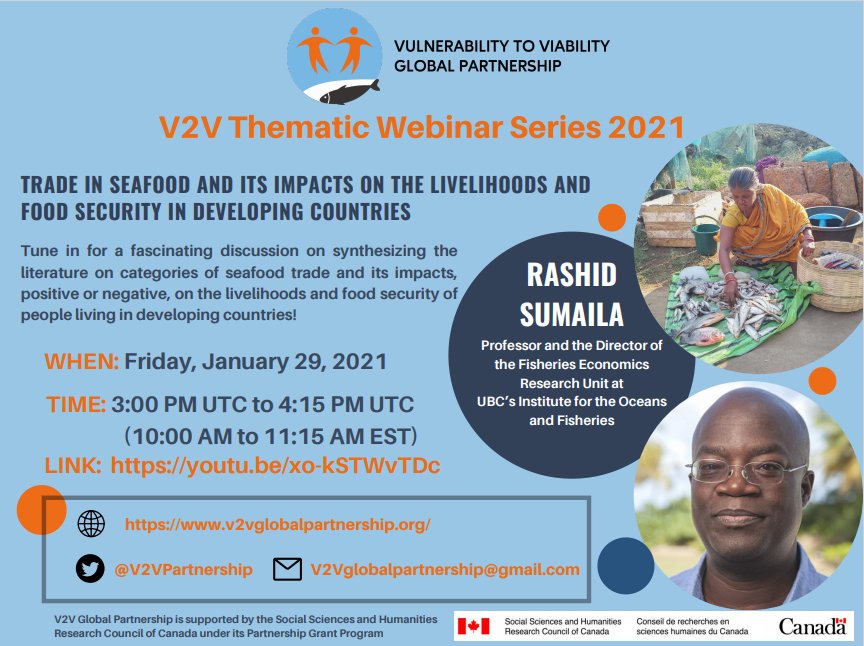
Dr. Rashid Sumaila, professor in UBC Science’s Institute for the Oceans and Fisheries, as well as the School of Public Policy and Global Affairs in the Faculty of Arts, is one of six faculty members who have been named by UBC as a University Killam Professor. The University Killam Professorship is the highest honour that UBC can confer on a faculty member, and recognizes exceptional teachers and researchers who are leaders in their fields, and who have received international recognition for their talents and efforts.

Canada and Transboundary Fisheries Management in Changing Oceans: Taking Stock, Future Scenarios

Special Issue in Ecology & Society (external link)


Guest Editorial

Canada and transboundary fisheries management in changing oceans: taking stock, future scenarios

U. R. Sumaila, Fisheries Economics Research Unit, Institute for the Oceans and Fisheries, The University of British Columbia; School of Public Policy and Global Affairs, the University of British Columbia, Vancouver, British Columbia, Canada David L. VanderZwaag, Marine & Environmental Law Institute; Dalhousie University

This article is originally posted on Sofar Ocean.


For years (and we mean many years), the ocean helped us mitigate the early effects of human emissions by absorbing greenhouse gases, like carbon dioxide and heat, from the atmosphere. As a result, more than 90 percent of the warming that happened on Earth between 1971 and 2010 occurred in the ocean. A selfless act by Mother Nature, but it's catching up to us.

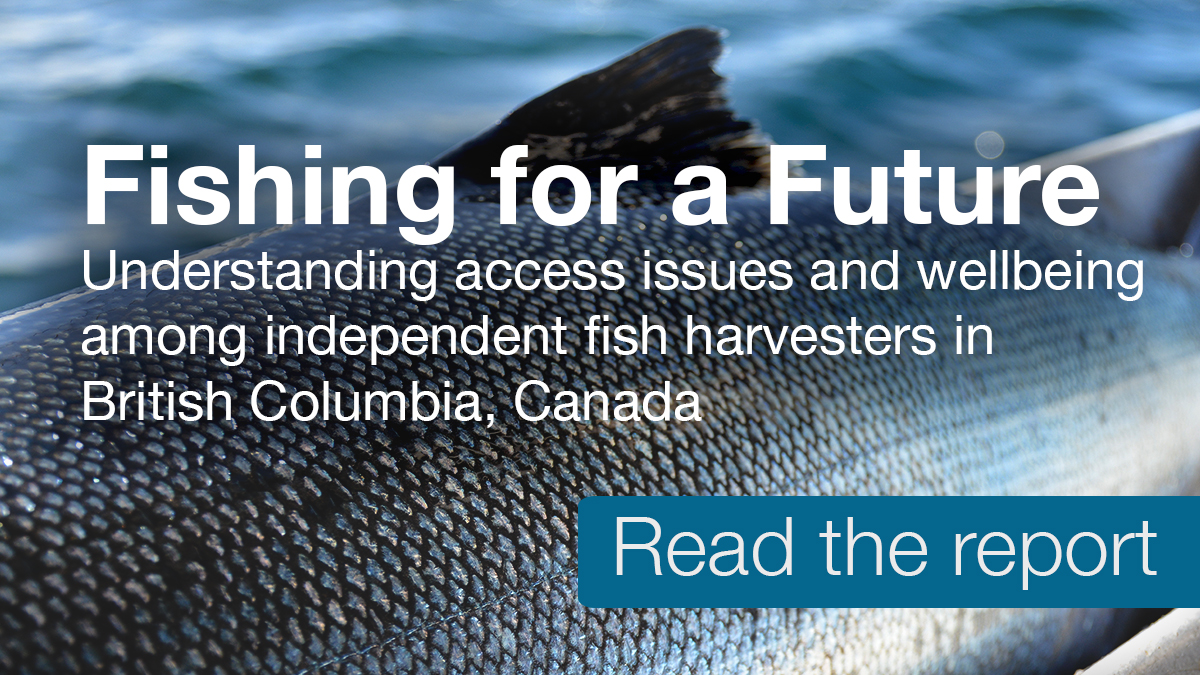
Nov 9, 2020 - ​BC coastal communities rely on fishing to support their livelihoods, culture, and food security. However, increased pressure on resources and unfair regulations have put the many values gained from fishing — that Indigenous and non-Indigenous harvesters, business owners, and coastal communities depend on — at risk. One of the most significant and growing challenges they face are the barriers to access and benefit from available marine resources.

This is a collection of highlights from the press release. Find the full report here.


The independent report “Protecting 30% of the planet for nature: costs, benefits and economic implications” represents the most comprehensive global assessment of the financial and economic impacts of protected areas ever completed. Based on work from over 100 experts, the report found that protecting 30% of the world’s land and ocean provides greater benefits than the status quo, both in terms of financial outcomes and non-monetary measures like ecosystem services. These benefits outweigh the costs by a factor of at least 5:1.

The COVID-19 Pandemic, Small-Scale Fisheries and Coastal Fishing Communities

Brief

Download PDF

Abstract

The COVID-19 pandemic has rapidly spread around the world with extensive social and economic effects. This editorial focuses specifically on the implications of the pandemic for small-scale fishers, including marketing and processing aspects of the sector, and coastal fishing communities, drawing from news and reports from around the world. Negative consequences to date have included complete shut-downs of some fisheries, knock-on economic effects from market disruptions, increased health risks for fishers, processors and communities, additional implications for marginalized groups, exacerbated vulnerabilities to other social and environmental stressors, and increased Illegal, Unreported and Unregulated fishing. Though much of the news is dire, there have been some positive outcomes such as food sharing, the revival of local food networks, increases in local sales through direct marketing and deliveries, collective actions to safeguard rights, collaborations between communities and governments, and reduced fishing pressure in some places. While the crisis is still unfolding, there is an urgent need to coordinate, plan and implement effective short- and long-term responses. Thus, we urge governments, development organizations, NGOs, donors, the private sector, and researchers to rapidly mobilize in support of small-scale fishers, coastal fishing communities, and associated civil society organizations, and suggest actions that can be taken by each to help these groups respond to the COVID-19 pandemic.