News

Article originally posted at toobigtoignore.net.


Special session for the 6th International Marine Conservation Congress (IMCC)


21-27 August 2020, Kiel Germany

“Challenges for marine indigenous tenures around the world and their global contribution to conservation"

Session synopsis

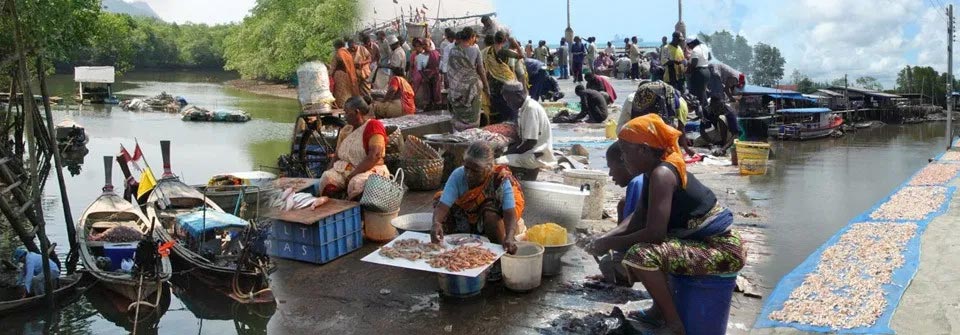
Across the world, different indigenous communities and stateless nations are contributing to marine conservation through different forms of tenures systems or customary rights. The session aims to bring together papers and speakers to review the challenges and conflicts they face, where they are, their different varieties, the extent they are empowered or under threat, and the marine species and small scale fisheries involved. While in some areas, marine indigenous tenures are developing forms of conservation planning to conserve the environment, others are searching for recognition of their traditional customary systems. Others are struggling to limit developments from ports, energy, industrial fishing and even top down forms of exclusive conservation zoning. This session will support how this is being developed in different regions, and how it can be better linked strategically.
Subsidizing extinction?

In 2010 world governments agreed to eliminate, phase out or reform incentives that harm biodiversity by 2020. Yet few governments have even identified such incentives, never mind taking action on them. While some subsidies are well studied, such as in fisheries and fossil fuel production, there is an urgent need for the conservation community to study the potential effects a broader array of subsidies have on biodiversity. In addition, we need a better understanding of who benefits from these subsidies. We term this pursuit ‘subsidy accountability’, which is crucial but challenging work crossing disciplines and government ministries. It requires ecologists, forensic accountants, and policy wonks, calculating and forecasting the positive and negative effects of subsidies and their elimination on biodiversity and vulnerable human populations. The Intergovernmental Panel for Biodiversity and Ecosystem Services recently concluded that action on biodiversity loss requires transformative economic change; true action on subsidies is one step towards such change.

Supporting early career researchers: insights from interdisciplinary marine scientists

The immense challenges associated with realizing ocean and coastal sustainability require highly skilled interdisciplinary marine scientists. However, the barriers experienced by early career researchers (ECRs) seeking to address these challenges, and the support required to overcome those barriers, are not well understood. This study examines the perspectives of ECRs on opportunities to build interdisciplinary research capacity in marine science. We engaged 23 current and former graduate students and postdoctoral fellows in a policy Delphi method with three rounds of surveying that included semi-structured questionnaires and q-methodology. We identified the following five barriers that limit ECRs’ capacity for interdisciplinary research: (i) demanding workloads; (ii) stress linked to funding, publishing, and employment uncertainty; (iii) limited support for balancing personal and professional commitments; (iv) ineffective supervisory support; and (v) the steep learning curve associated with interdisciplinary research. Our analysis highlights three main types of responses to these barriers adopted by ECRs, including “taking on too much”, “coping effectively”, and “maintaining material wellbeing at any cost”. To overcome these barriers, we propose the following three institutional actions to build early career interdisciplinary researcher capacity: formalize mentorship, create interdisciplinary research groups, and mainstream mental health support.

Input versus output controls as instruments for fisheries management with a focus on Mediterranean fisheries

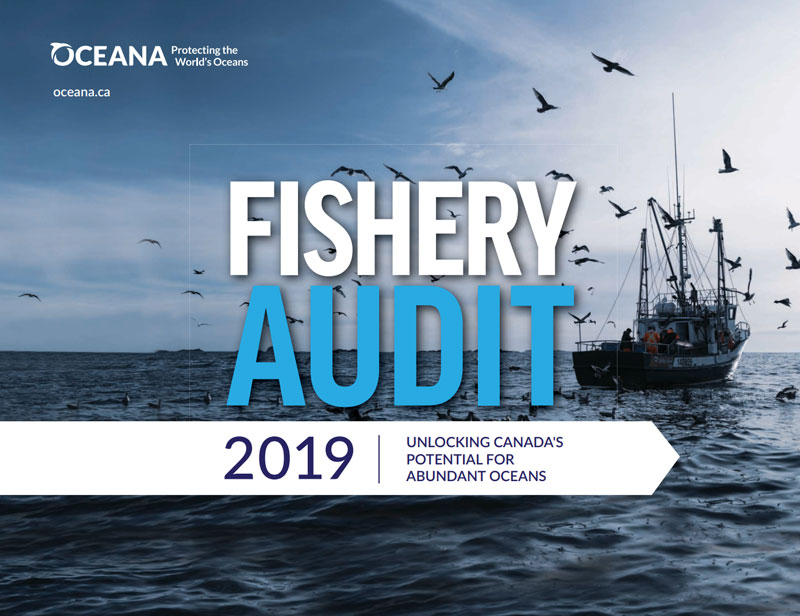
Article 4 of EU Regulation 1380/2013 on the Common Fisheries Policy (CFP) define ‘technical measure’ as “a measure that regulates the composition of catches by species and size and the impacts on components of the ecosystems resulting from fishing activities by establishing conditions for the use and structure of fishing gear and restrictions on access to fishing areas.” Thus, these are a set of rules that govern where, when and how fishing can take place. Most of the fisheries management systems in place worldwide employ technical measures based on control of inputs and outputs. For Europe, the European Commission is reforming the CFP legislative framework and has updated and amended the rules for technical measures (EU Regulation 2019/1241). This is particularly important for management systems in the European parts of the Mediterranean, where input measures play a major role, in contrast to management systems in the North East Atlantic, which uses mainly output measures (catch quota).

OceanCanada News

Rashid Sumaila Named Fellow of Royal Society of Canada

Congratulations to Rashid Sumaila for becoming a Fellow of Royal Society of Canada! Rashid is one of the world’s most innovative researchers on the future of the oceans, integrating the social, economic and fisheries sciences to build novel pathways towards sustainable fisheries. Read more here.

Escaping the perfect storm of simultaneous climate change impacts on agriculture and marine fisheries

Climate change can alter conditions that sustain food production and availability, with cascading consequences for food security and global economies. Here, we evaluate the vulnerability of societies to the simultaneous impacts of climate change on agriculture and marine fisheries at a global scale. Under a “business-as-usual” emission scenario, ~90% of the world’s population—most of whom live in the most sensitive and least developed countries—are projected to be exposed to losses of food production in both sectors, while less than 3% would live in regions experiencing simultaneous productivity gains by 2100. Under a strong mitigation scenario comparable to achieving the Paris Agreement, most countries—including the most vulnerable and many of the largest CO2 producers—would experience concomitant net gains in agriculture and fisheries production. Reducing societies’ vulnerability to future climate impacts requires prompt mitigation actions led by major CO2 emitters coupled with strategic adaptation within and across sectors.