News

Conservation, contraception and controversy: Supporting human rights to enable sustainable fisheries in Madagascar

Environmental NGOs are increasingly called upon to respect human rights when undertaking conservation programs. Evaluating a family planning program running alongside marine management measures in Madagascar, we find that family planning services provided by an environmental NGO can support women’s reproductive rights. Family planning services allow the option of smaller families, and give more time to work, increased income and better health. These benefits do not translate into increased support for, or participation in, marine management, however, and women who are able to work more are typically fishing more. We identify patriarchal norms as a key factor preventing the family planning programme from manifesting in improved resource stewardship, limiting opportunities for women to participate fully in resource management meetings and diversify their livelihood outside traditional tasks, including fishing. We propose that a successful human rights-based approach must be more comprehensive, targeting multiple rights and challenging existing institutions and power structures.
Originally posted at toobigtoignore.net


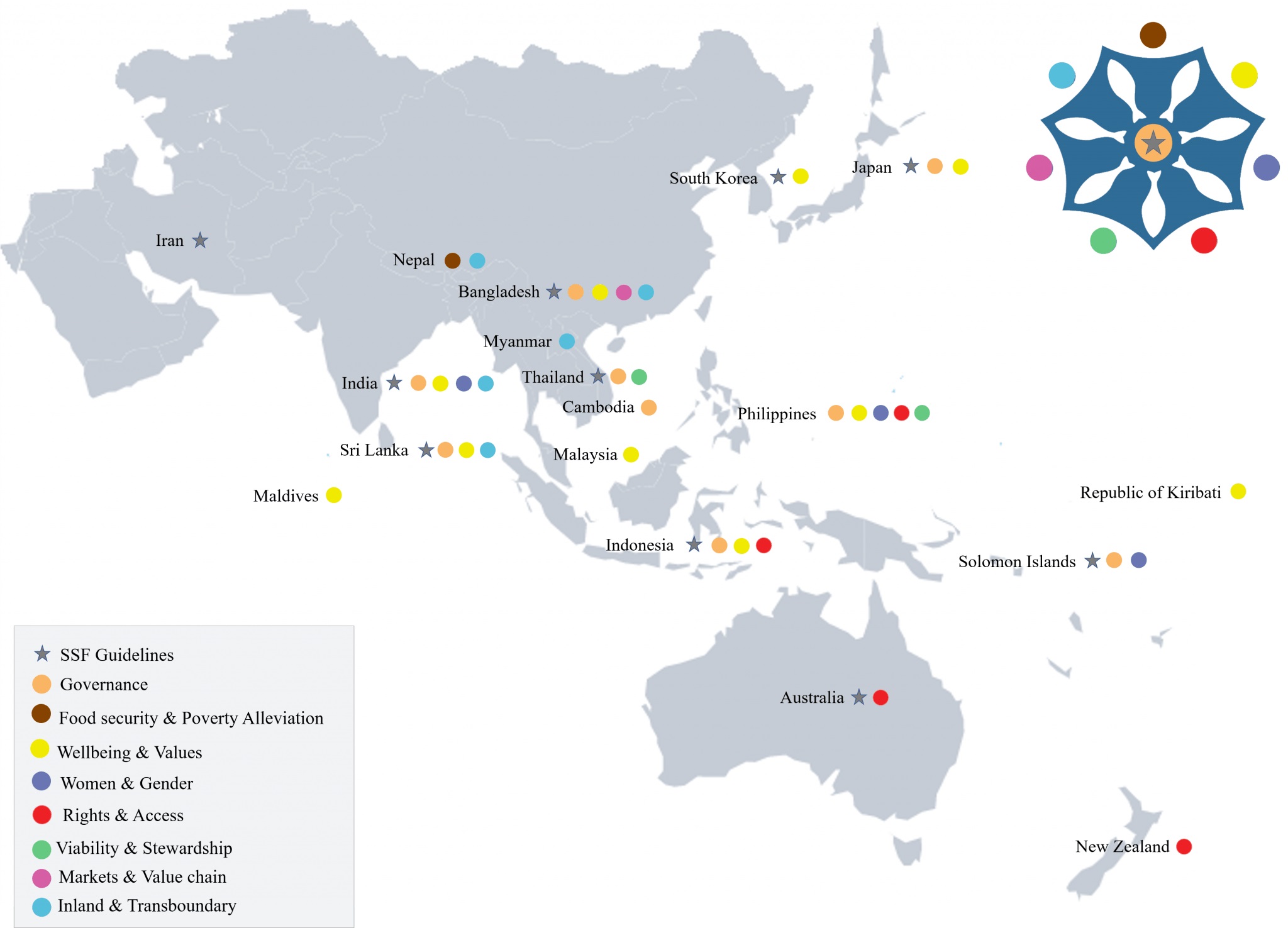
The 'Blue Economy' and 'Blue Growth' initiatives, which frame the oceans as the new economic and development frontier, have entered the international agenda over the past decade. Although some of these development agendas imply an alignment with social objectives and speak to small-scale fisheries concerns, many are oriented towards further technological innovation, industrialization of the oceans, and commodification of the marine resources. These initiatives pose a potential risk to the livelihoods and wellbeing of small-scale fisheries, as they could affect access to coastal and ocean spaces, fisheries resources, and markets. Therefore, it is essential to push towards a more equitable and just oceans for small-scale fishing, and one way to do this is to enhance knowledge about the current situations, looking at social injustice and inequity issues affecting women and men involved in small-scale fisheries.

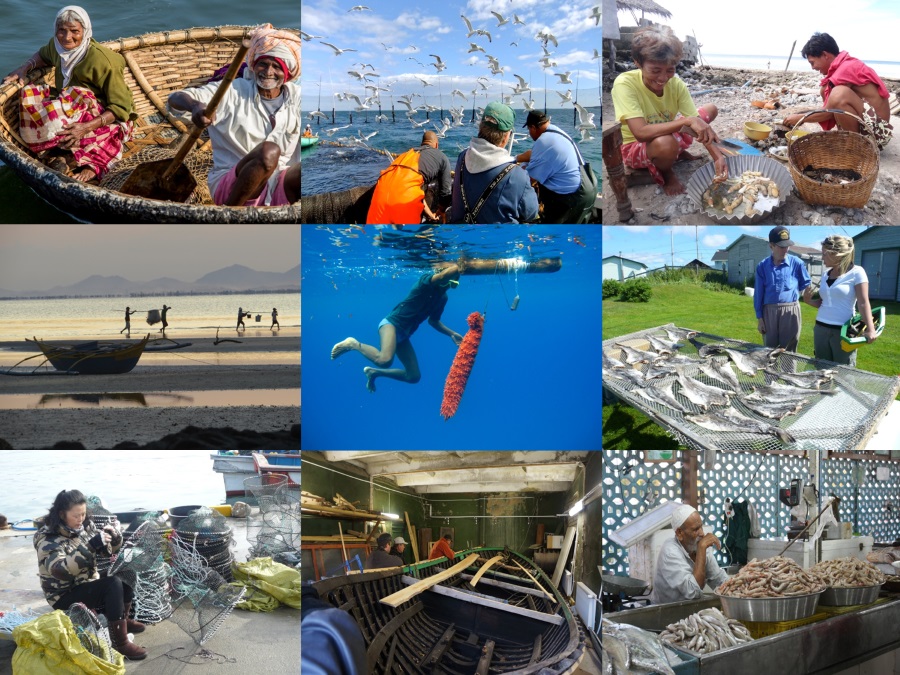
Since 2012, TBTI has been conducting in-depth, transdisciplinary research and global analysis, aiming to improve knowledge and understanding of various aspects of small-scale fisheries. By allocating considerable resources to conduct research, integrate data, and synthesize findings, we have been able to publish many book volumes, special journal issues, articles, e-books and reports, all of which provide concrete evidence about the existence and importance of small-scale fisheries around the world.

Coastal Communities… At the Ready is a new film that explores how coastal communities are preparing for, and responding to, a range of climate change impacts and other hazards hitting the coast. That includes everything from hurricanes and other extreme weather, to floods and erosion, to tsunamis and oil spills.

Ecosystem-based management can contribute to cooperation in transboundary fisheries: The case of pacific sardine

Transboundary fish stocks complicate sustainable fishing strategies, particularly when stakeholders have diverse objectives and regulatory and governance frameworks. Pacific sardine (Sardinops sagax) in the California Current is shared by up to three fishing nations— Canada, the United States, and Mexico—and climate-driven abundance and distribution dynamics can complicate cooperative fisheries, leading to overfishing. This study builds on previous analyses by integrating ecosystem linkages into a game theory model of transboundary sardine fisheries under various climate scenarios. Cooperative fishing strategies that account for the ecosystem-wide value of sardine as forage for other species result in increased economic benefits compared to strategies that only account for the single-species value of sardine fisheries to a given fishing country. Total ecosystem landed value is maximized at a sardine fishing rate only somewhat lower than sardine FMSY, which is more precautionary but still allows the fishery to operate. Incorporating ecosystem dynamics into management-applicable models can highlight ways in which ecosystem-based fisheries management can improve both sustainability and profitability and help managers prioritize wider ecological research. Ecosystem-based management will be increasingly required to understand and adapt to the observed rapid shifts in species distributions due to climate change, and to design strategies to achieve sustainable and profitable fisheries amidst changing ecosystems.

Busting myths that hinder an agreement to end harmful fisheries subsidies.

The World Trade Organization's (WTO) has committed to achieving a multilateral and legally binding agreement to eliminate fisheries subsidies that contribute to overcapacity and overfished stocks, and to illegal, unreported, and unregulated fisheries. This agreement is due in December of 2019 and also represents UN Sustainable Development Goal 14.6. A strong agreement would benefit fishers and marine environments, represent a milestone for multilateralism and both international and national fisheries policy, and become the first global achievement of a SDG target. To help discussions and negotiations focus on real challenges, we briefly dispel five myths related to harmful fisheries subsidies. Harmful fisheries subsidies are not effective at competing with large fishing nations and worsen poverty in the long-term. The worst effects of harmful subsidies occur when management capacity is limited, and overexploitation and overcapacity in one region can impact others. Because most global stocks are already exploited at least at maximum sustainable levels, more fishing capacity is unnecessary. Turning away from harmful subsidies can enable new investments to benefit fishing communities, national economies, and marine ecosystems.

Updated estimates and analysis of global fisheries subsidies

The period from 2019 to 2020 is critical in determining whether the World Trade Organization (WTO), tasked with eliminating capacity-enhancing fisheries subsidies, can deliver to the world an agreement that will discipline subsidies that lead to overfishing. Here, following extensive data collection efforts, we present an update of the current scope, amount and analysis of the level of subsidisation of the fisheries sector worldwide. We estimate global fisheries subsidies at USD 35.4 billion in 2018, of which capacity-enhancing subsidies are USD 22.2 billion. The top five subsidising political entities (China, European Union, USA, Republic of Korea and Japan) contribute 58% (USD 20.5 billion) of the total estimated subsidy. The updated global figure has decreased since the most recent previous estimate from 2009, of USD 41.4 billion in 2018 constant dollars. The difference between these two estimates can be largely explained by improvements in methodology and the difference in the actual amount of subsidies provided. Thus, we consider direct statistical comparison of these numbers to be inappropriate. Having said that, the difference between the estimates suggest that the increase in fisheries subsidies provided in the preceding decades may have halted. Still, the bulk of harmful ‘capacity-enhancing’ subsidies, particularly those for fossil fuels have actually increased as a proportion of total subsidies. As such, for the benefit of marine ecosystems, and current and future generations of people, all hands must be on deck in helping the WTO reach a meaningful agreement to discipline subsidies that lead to overcapacity and overfishing.

Article originally posted at oceans.ubc.ca.


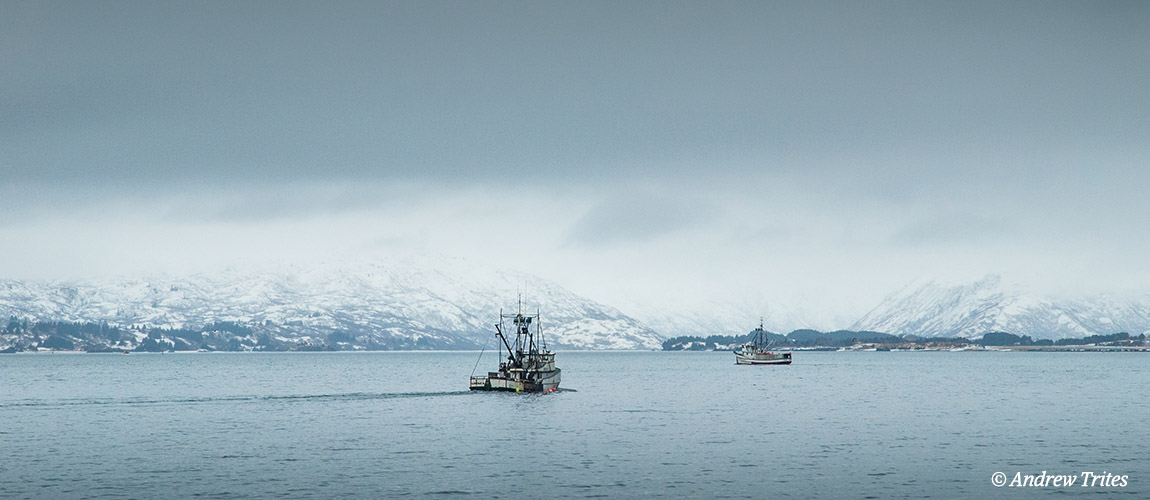
The migration of fish due to unmitigated climate change could net fisheries in the Arctic 37 times more fish than current annual catch amounts by the end of the century, a new study from the University of British Columbia has found. But, the researchers warn, any future commercial fisheries must ensure species and ecosystem sustainability and consider the food security implications for local communities.

Using harmonized historical catch data to infer the expansion of global tuna fisheries

Despite worldwide demand for tuna products and considerable conservation interest by civil society, no single global dataset exists capturing the spatial extent of all catches from fisheries for large pelagic species across all ocean basins. Efforts to spatially quantify the historical catch of global tuna fisheries have been restricted to the few taxa of major economic interest, creating a truncated view of the true extent of the fisheries for tuna and other large pelagic fishes. Individual Regional Fisheries Management Organizations (RFMOs) have given varying degrees of attention to minor taxa and non-target species only in more recent years. Here, we compiled and harmonized public datasets of nominal landed catches, as well as spatial data on reported catches of large pelagic taxa reported for the industrial tuna and large pelagic fisheries by tuna RFMOs for the last 60+ years. Furthermore, we provide a preliminary estimate of marine finfishes discarded by these fisheries. We spatialized these data to create a publicly available, comprehensive dataset presenting the historical reported landed catches plus preliminary discards of these species in space for 1950–2016. Our findings suggest that current public reporting efforts are insufficient to fully and transparently document the global historical extent of fisheries for tuna and other large pelagic fishes. Further harmonization of our findings with data from small-scale tuna fisheries could contribute to a fuller picture of global tuna and large pelagic fisheries.